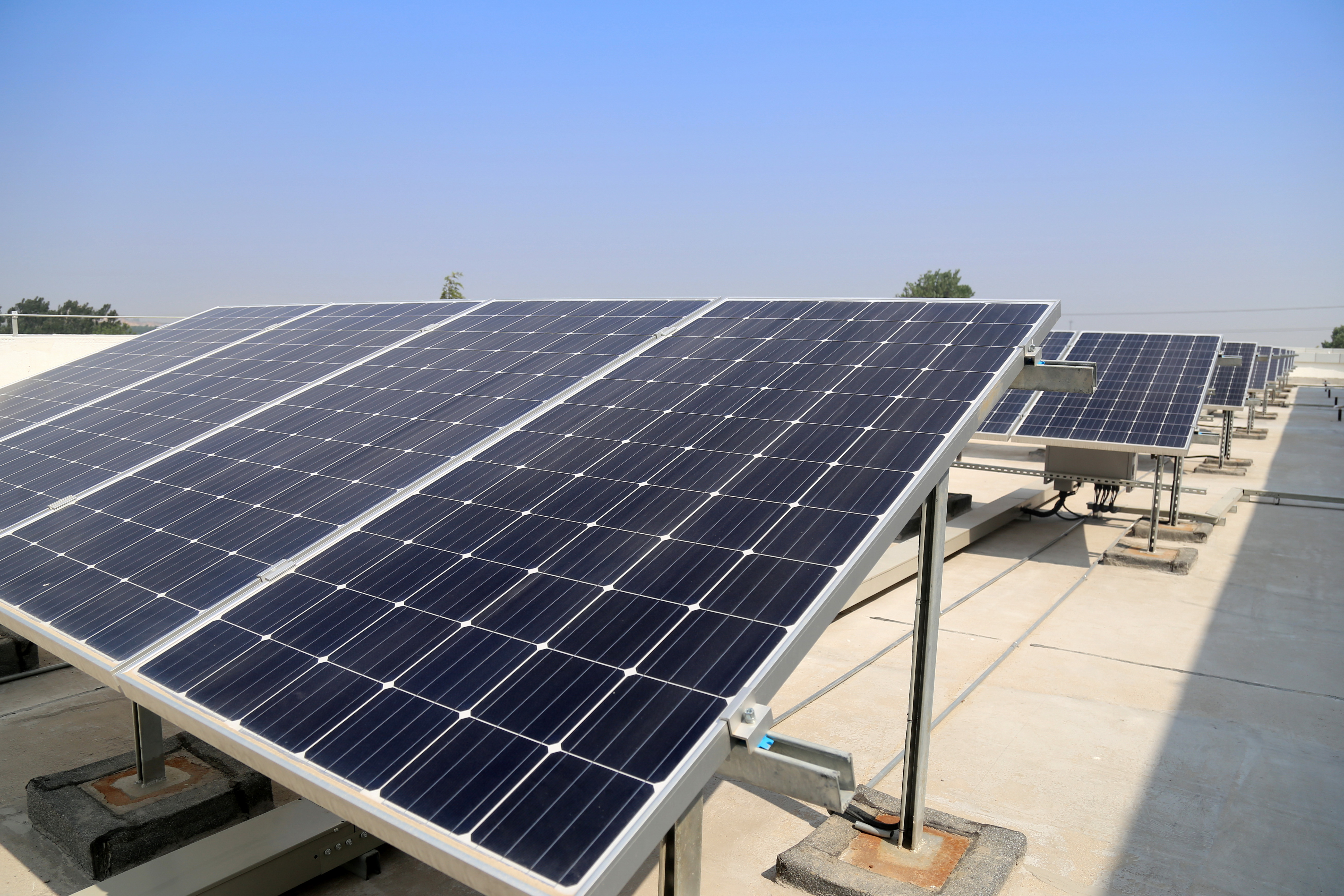
Power Every Home
in Your Community
Save up to ₹2,400/unit/month on common area electricity. Group subsidies, single-point installation, and zero-hassle maintenance for your entire society.
Per-unit saving
₹2,400 / mo
Society CO₂ saved
~5.2 T / yr
Societies served
500+ & growing
Government of India
MNRE Registered
The Committee's Decision Framework
Replace common solar theory with the actual decisions a housing society committee must make before approving rooftop solar.
A society solar plant must satisfy three groups: committee, residents and technical safety.
The best housing society solar proposal is not only about lowest price. It should explain common-area savings, approval process, installation disturbance, safety scope, benefit clarity and maintenance responsibility.
01Common bills before capacity
02Committee clarity before quote
03Electrical safety before discount
04Maintenance plan before handover
What should the committee understand first?
The plant should be sized against common-area consumption, not against total society size. Lifts, pumps, lights, STP and clubhouse loads decide the real use case.
What makes a society proposal premium?
A strong proposal should include load study, roof feasibility, system design, savings assumption, approval path, safety scope, warranty and O&M plan.
Where do society projects usually get delayed?
Unclear approval, resident objections, roof access issues, shutdown coordination, cable routing, DISCOM paperwork and unclear benefit-sharing can delay execution.
What should SOLAR-MAIT communicate?
That the company can guide not just installation, but committee discussion, technical feasibility, execution planning, net metering support and long-term service.
Show Society Solar by Practical Use Case
Housing societies do not buy solar the way individual homeowners do. They need a clear model that connects solar to society expenses, approvals and resident benefit.
Common Area Solar
Best when the society wants to reduce common electricity bills for lifts, pumps, corridor lighting, basement lighting and clubhouse loads.
This is the easiest model to explain in society meetings because savings are visible in maintenance/common-area expenses.
Committee caution
Plant size should be matched with common meter consumption, sanctioned load and available shadow-free roof area.
Resident Benefit Model
Useful when a society wants to explore wider benefit distribution beyond only common-area consumption.
Requires clearer member communication, billing logic, DISCOM feasibility and internal approval before execution.
Committee caution
Benefit-sharing and metering rules must be clarified early to avoid confusion among residents.
Hybrid Backup Zones
Best for societies that want solar plus selected backup support for critical common infrastructure.
Can be considered for security systems, essential lighting, society office, gate systems and limited backup use cases.
Committee caution
Battery backup should be designed for essential loads only; full-society backup can become unnecessarily expensive.
What a Housing Society Solar Audit Should Check
Premium society content should show that SOLAR-MAIT understands rooftops, common loads, electrical rooms, safety and approvals — not only panel installation.
Common load profile
We study lift, pump, lighting, STP, clubhouse and basement load patterns before capacity planning.
Rooftop rights & usability
Society rooftops often have tanks, mumty, shafts, ducts, dish antennas and access restrictions.
Shadow & generation window
Tall towers, parapets and nearby blocks can change actual generation more than roof size alone.
Electrical room route
Cable routing, meter room location, LT panel access and safety isolation must be studied carefully.
Structural & wind safety
Mounting design must consider roof condition, height, wind exposure and safe maintenance access.
Approvals & documents
Committee approval, NOC, DISCOM process and net metering paperwork should be planned from day one.
Make society savings transparent enough for a meeting.
For societies, savings must be explainable to committee members and residents. Show what affects savings instead of promising one fixed number.
Common meter bill
The first calculation should be based on common-area units and tariff.
Load timing
Daytime pump, lighting and clubhouse usage can improve solar self-consumption.
Available roof
Usable, shadow-free roof area decides practical system size.
O&M planning
Cleaning, monitoring and inspection keep generation predictable for years.
Committee Savings Card
Convert the quote into committee language.
Turn a Complex Society Decision into a Clear Process
The website should make the committee feel that SOLAR-MAIT can manage the journey from first discussion to execution and handover.
Society load diagnosis
We review common-area electricity bills, sanctioned load, meter type, monthly consumption and major electrical loads.
Input: common meter bills + load listRooftop & electrical audit
Usable roof, shadow, structure, cable path, LT room, earthing location and installation access are checked.
Output: feasibility observationsCommittee-ready proposal
The proposal explains plant size, expected generation, savings logic, scope, warranty, safety and project timeline.
Output: RWA/AOA discussion documentMember communication support
We help the committee explain the project in simple terms: cost, benefit, safety, maintenance and payback logic.
Output: meeting-ready clarityExecution with resident safety
Material movement, roof work, electrical shutdown, cable routing and installation are planned to reduce disturbance.
Output: controlled installationHandover & monitoring
Society receives monitoring guidance, warranty details, maintenance plan and service communication process.
Output: long-term confidenceWhy Housing Societies Go Solar with Us
The section should make committee members feel: 'They understand society approvals, not just installation.'
Committee-friendly planning
We create proposals that committee members can understand, compare and present clearly to residents.
Resident communication support
Housing society projects need consensus. We help simplify technical and financial points for better acceptance.
Safety-first engineering
Cable routing, protection boxes, earthing, structure and access planning are treated as core project items.
Common-area focus
We focus on society-specific loads like lifts, pumps, lights, STP, guard room, basement and clubhouse usage.
Execution discipline
We plan work timing, material movement and shutdown coordination to reduce disturbance inside the society.
Long-term service mindset
A society solar plant needs cleaning, inspection, monitoring and predictable service support after commissioning.
Ready to save together?
Get a committee-ready solar plan for your housing society.
Share common meter bills and rooftop details. SOLAR-MAIT can guide your committee with suitable plant size, savings model, approval path and O&M planning.
Don't just take our word for it...
Lorem ipsum, dolor sit amet consectetur adipisicing elit. Voluptas veritatis illo placeat harum porro optio fugit a culpa sunt id!